
Last Updated on April 15, 2026 by Maggie McKneely
Are you planning a trip to South America’s most underrated country? Check out this 10-day Bolivia itinerary to get the most out of your adventure!
*This post contains affiliate links. That just means that if you happen to click on one of those links and end up making a purchase, I make a small commission (and you will have made my day!)
10 Day Bolivia Itinerary
Everyone goes to Peru. But, very few people hop across the border to its oft-forgotten neighbor, Bolivia. But I love supporting the underdogs and think they have far more to offer than most tourists realize. Bolivia, that overshadowed gem in the heart of the Andes, is no exception.
Thanks in part to decades of an anti-American socialist regime, and in part for tourists rarely making it across the border from their pilgrimages to Machu Picchu, Bolivia is far less westernized than you would expect from a modern South American country. You won’t find a McDonald’s here or commercial helicopter tours over its vast landscapes. You won’t even find much English among the Bolivian people (we got by thanks to Google translate and lots of hand motions). Cities and populations that once prospered have been crushed by political corruption and untenable economic policies.
What you will find is a wealth of natural beauty – from the salt flats at Uyuni to the soaring Andes mountains – and a culture marked by remarkable grit, hard work, and hospitality. If you want to visit a beautiful corner of South America free from the effects of overtourism, you need this Bolivia itinerary.
Table of Contents
Tips for Visiting Bolivia
Requirements for entry
There is no visa requirement to enter Bolivia. If you are planning on visiting Bolivia’s tropical areas, or come from a country with a high rate of yellow fever, you may be required to get a yellow fever vaccination. However, if you will be spending your trip in the highlands (or following this exact Bolivia itinerary), you will not need to get the vaccine. But be sure to check with your government before you travel. For Americans, check the latest State Department info here.
Best time of year to visit
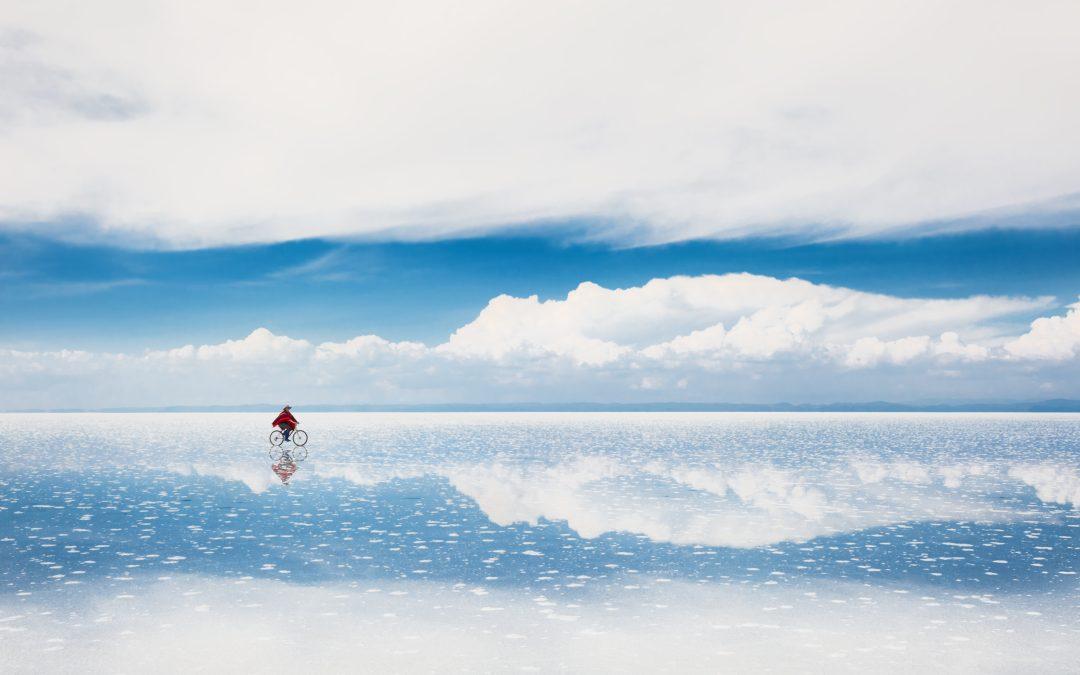
This honestly depends on what you want the salt flats to look like. Bolivia’s weather is split into the dry season (May-October) and the rainy season (November-March). During the dry season, the salt flats are, well, dry, and you can drive all over them. During the rainy season, you can’t visit as many different places on the salt flats, but you can get those incredible pictures of the salt flats acting as the world’s largest mirror, where the thin layer of water perfectly reflects the sky.
The dry season is also far better for hiking in the Andes and visiting remote regions, as roads can become impassable during the rainy season. However, do prepare for colder temperatures in the highlands in the dry season.
I’m told that the rainy season has fewer tourists, but we visited in November and felt like we had the country to ourselves. Since Bolivia is one of the least-visited countries in South America, I doubt crowds of tourists are ever much of an issue.
Money
The currency in Bolivia is the Boliviano. While many restaurants and stores in the larger cities do take credit cards, you’ll want to make sure that you have plenty of cash as well. Most of the smaller shops and market stalls only accept cash. You will also occasionally need coins for public restrooms and transit center fees. In order to get the best exchange rate, bring USD or Euros with you and exchange them at a money exchange office (NOT a bank or the airport).
Check out my packing list for Bolivia for more on what to bring!
Transportation
For travel between cities, the most common mode of transportation is buses. Most are run by various private companies and are relatively nice.
You can rent a car if you prefer to drive yourself, but road conditions can be sketchy in Bolivia and are often also closed during political demonstrations. Renting a car will not guarantee that you will get where you want to go any faster than by using public transportation. Virtually none of the major rental car companies operate in Bolivia but you can find local rental companies if you really want to go that route.
While too expensive for most Bolivians, you can also get flights to most of the larger cities. It’s a great way to save a day or 2 of travel between places.
For transportation within cities like La Paz, taxis are available, but be sure to agree to a fare before you get in the car (have your hotel arrange a taxi for you to save yourself the stress). You can also use the cable car system (specific to La Paz), which is very efficient, cheap, and with 11 lines, reaches most parts of the city.
Dealing with Altitude Sickness
Many of Bolivia’s most amazing places are located at a very high altitude. La Paz sits around 12,000 ft (3600m), and the salt flats and Isla del Sol both get up to 14,000 ft. At no point in this Bolivia itinerary will you get below 9000 ft. Most of us traveling to Bolivia are not used to functioning at that altitude. And if you fly directly into La Paz, you won’t have any time to acclimate to it.
So, here are a few things to do to mitigate the effects of altitude sickness.
- I am not a doctor, and be sure to check in with yours before taking any of my advice! But there is a prescription medication that you can get called Acetazolamide. Although originally used to treat glaucoma, it’s very commonly used to help speed up the acclimatization process for people traveling to high-altitude areas, like Bolivia. You start taking it 24-48 hours before you arrive and then for a few days afterwards. It can come with some uncomfortable side effects, like numbness, frequent urination, and nausea, but it helps avoid getting very sick from the altitude.
- My mom and I both decided to take this because we did not want to risk spending the first few days of our trip sick and unable to do anything. I did have some of the side effects, like facial numbness, but they were not severe and did not last long. And neither of us had any issues with altitude sickness. So for us, this option worked great!
- Don’t plan strenuous activities for your first few days. It’s easier to adjust to the altitude if you don’t ask your body to do anything too taxing. It does not matter your age or fitness ability; the lack of oxygen affects everyone because your body simply is not used to it. So be gracious and kind to yourself and don’t try to scale a 6000m peak as soon as you get off the airplane.
- The coca leaf is legal in Bolivia, and it is EVERYWHERE. It’s said to help relieve altitude sickness symptoms, especially nausea. You can get coca tea in restaurants and hotels. You can also find chewable candied forms of the leaf (sort of like a cough drop). I wasn’t keen on the taste of the tea, but a friend traveling with us drank it every day and swore that it helped her.
- Drink water!!!! You get dehydrated much quicker at high altitudes, which just makes you feel even worse. So drink water constantly. Be sure to bring a filtered water bottle or purchase bottled water as you can’t drink the tap water in Bolivia.
10 Day Bolivia Itinerary
Day 1: Arrive in La Paz
Bolivia’s city in the clouds is the gateway to the nation’s most exciting destinations, one of which is La Paz itself. At an elevation of 12,000ft (3600m), it’s the highest capital city in the world, making it unlike any other metropolis on the planet. This is where your Bolivian adventure begins.
But because of its high elevation, I don’t recommend actually doing a whole lot on the first day of your Bolivia itinerary. Most people, including my mom and me, walked off the airplane at La Paz’s El Alto airport and immediately said, “Wow, there’s NO oxygen here!” We continued to repeat that sentiment as we hoisted our suitcases off the baggage claim belt, dragged them out to the car waiting to take us to the hotel, and then huffed and puffed as we lugged them up to our hotel room.
The number one way to avoid the worst effects of altitude sickness is to let yourself gently adjust. So once you get checked into your hotel, sip some coca tea and take the day easy so that you can hit the ground running on day 2.
Where to Stay
The most convenient area to stay is in Zona Centro, which includes San Francisco Cathedral and the Witches’ Market. Most tours pick up from this area, and it’s also the most tourist-friendly. We stayed in Hotel Naira, which is located next to the cathedral. It’s a gorgeous hotel with a central courtyard, a comfy living room with tea and water available 24/7, and wonderful staff.
Where you don’t want to stay is in El Alto (the area around the airport), or high-end Zona Sur, which is the wealthy part of town but is a long way away from anything you’ll want to go to in La Paz.
Day 2+3: Copacabana
Day 2: Isla del Sol
Start day 2 of your Bolivia itinerary by catching a morning bus to Copacabana, which sits on Lake Titicaca, the highest navigable lake in the world.
Buses leave between 7 and 8AM from La Paz’s main bus station each morning for the 4-5 hour trip to Copacabana. There are a few companies that make the trip; we used Trans Titicaca and had a perfectly fine experience. You will want to get tickets in advance though. The journey is scenic, with towering mountains to the east for most of the trip. It also includes an unusual water crossing at Tiquina where you’ll get off the bus so that the bus can cross on a barge while you and the rest of the passengers ride in a motor boat to the other side.
Once in Copacabana, check in to your hotel. While Copacabana is known as a resort town, the real draw (and your reason for making the trek here) is its proximity to Isla del Sol. Back when the Incas still controlled this part of the world, it was thought that this mountainous island in the heart of Lake Titicaca was the birthplace of the sun. So the Incas built temples and palaces and a 500-step staircase there, the ruins of which still remain. Visiting the island includes touring these ancient relics, as well as getting stunning views of the lake and an insight into the life of the people who still live on that roadless, carless island.

Isla del Sol
You can, of course, visit the island on your own. Ferries leave from Copacabana at 1:30PM every day and you can book tickets right at the main dock, where you’ll find multiple ferry operators selling tickets. Once on the island, you can hike the ridge-top trail that takes you from north to south as well as explore the many Incan ruins.
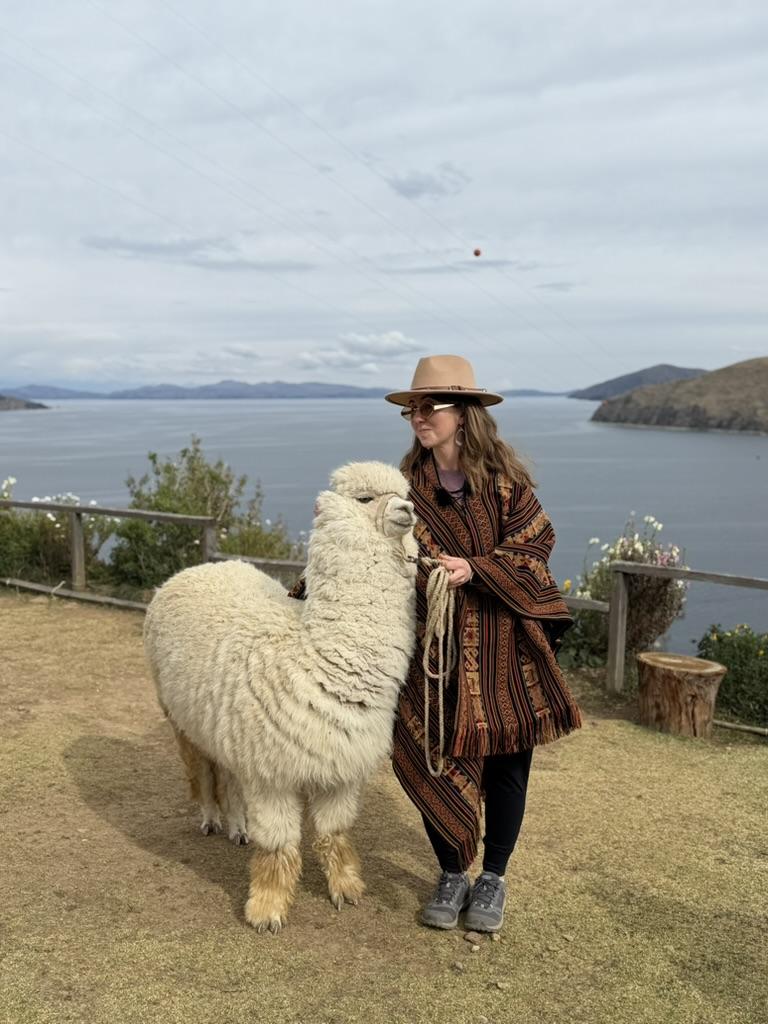
At the top of the island, there’s a cholita woman who might let you take pictures with her alpaca
However, I highly recommend visiting the island with a tour guide, as there are not many informational signs and most of the locals do not speak English. You can book this tour of Isla del Sol which includes lunch and a stop at nearby Moon Island (another Inca site).
Note: Isla del Sol has an elevation of about 13,000ft and is very hilly. As there are no cars, exploring it requires a fair bit of hiking. If you are not acclimated to the altitude yet or are not in good physical shape, maybe skip this excursion.
Where to Stay:
If you want more than an afternoon to explore Isla del Sol, there are a number of exceptional hotels on the island, such as Illampu. If you want to spend the night away from civilization but in unexpected comfort, this is the option for you.
We, however, stayed the night back in Copacabana in the exceedingly charming Hotel La Cupola. Not only is it home to the best restaurant in Copacabana, but the gardens are stunning, the rooms spacious and comfortable, and it has amazing views of the lake. I can’t recommend it enough!
Day 3: Copacabana – La Paz
Although Isla del Sol is the main reason to visit Copacabana, the town itself does have a few sites worth seeing (and since you’re here, you might as well see them!).
Things to see in Copacabana:
- Basilica of our Lady of Copacabana – This important church was built in the 17th century and is home to Bolivia’s patron saint, Our Lady of Copacabana.
- Plaza 2 de Febrero – Just outside of the cathedral, this square is home to a picture-ready Copacabana sign. There are also some important artifacts here as well as souvenir shops.
- Cerro Calvario (Calvary Hill) – If you are up for a hike, this trail signifies Christ’s journey to the cross. The top of the hill offers breathtaking views of the lake, particularly for sunset and sunrise.

Then, catch the afternoon bus back to La Paz. Just like yesterday’s bus, be sure to get your tickets in advance as the buses do fill up. After another 4-5 hours, you’ll be back in your hotel, ready to rest for tomorrow.
(Each time we came back to La Paz on our trip, we stayed at Hotel Naira rather than picking a different hotel each time. It truly is in the best location and the staff are super accommodating.)
Day 4: La Paz – Sucre
Today, travel from Bolivia’s economic capital of La Paz to its constitutional capital of Sucre! To save yourself from a 10+ hour bus ride, the easiest way to do this is to take a morning flight from La Paz to Sucre.

The oldest church in Bolivia is in Sucre
Known as the “White City of America,” beautiful Sucre was once a jewel in the crown of Spanish South America. Its stunning Old World architecture (which is, yes, painted white) is a testament to the wealth of the former empire and the nearby silver mines that fueled it. The lower elevation means the weather and climate are far more hospitable here than in La Paz – spending 24 hours of your Bolivia itinerary here is a nice break from the country’s other, more rugged locations.
Once you arrive in Sucre, take this comprehensive afternoon walking tour to learn about Bolivia’s most historic city. It was here that the fight for independence first started, and it was here that Simon Bolivar and his right-hand man, General Sucre, declared Bolivia free from Spain. For decades, the seat of government, the most important educational institutions, the heart of the church, and the most prominent banking companies were here in Sucre. A guided tour will help you make the most of your short time in this lovely city.
Where to Stay
We stayed in the stunning El Jardin de Su Merced, a bed and breakfast that was once a country house. It’s just a few blocks from Sucre’s central square.
Day 5: Sucre – Potosi – Uyuni
After a brief stint at lower altitude, begin to make your way to Bolivia’s world famous salt flats with a brief stop in the city of silver, Potosi.
From Sucre, Uyuni is roughly 7 hours by road. But right about halfway is Potosi, an extremely important city not just in Bolivian history, but that of the Spanish Empire. The silver mine here, Cerro Rico, once produced the majority of the world’s silver. Many silver products that you can see in churches and palaces in Europe today originated in Potosi. The mine still operates today, even though it no longer has any silver and its horrible working conditions are the subject of controversy. It’s well-worth making a short stop here to grab lunch and learn a little bit about this place.
This private driver will transport you from Sucre to Uyuni and includes a stop at Potosi and its mine.
From Potosi to Uyuni, the route is extremely scenic as the road travels through the barren Andean hills. You’ll see roaming herds of llamas, colorful landscapes, and unusual rock formations as you make your way to the destination you’ve been waiting for – Bolivia’s incredible salt flats.
Where to Stay
Despite being the most visited place in Bolivia, Uyuni is a dusty backwater town. However, thanks to the growing tourism industry, there are more hotel options every year. The one that we stayed at, Hotel Nido del Flamenco, had only been open for a year or so. Most lodgings here tend to be a bit more rustic but our hotel was very comfortable and the host very helpful in getting us taxis and recommending restaurants.
However, if you want a truly unique and luxurious experience, the most famous hotel in Bolivia is the Salt Palace. Built out of salt bricks, this hotel has a full-service spa, game room, amusement park, and full-service bar.
Day 6: Salt Flats
Day 6 of this Bolivia itinerary is dedicated to exploring the place everyone comes to Bolivia to see – the world’s largest salt flats.
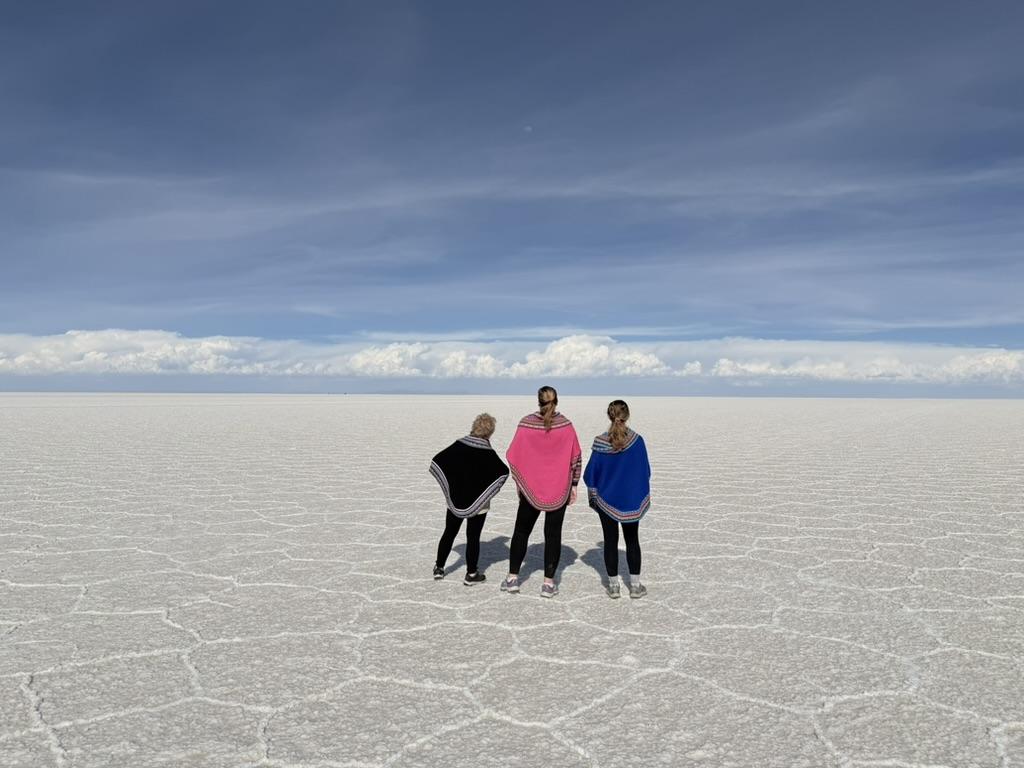
Posing on Bolivia’s salt flats!
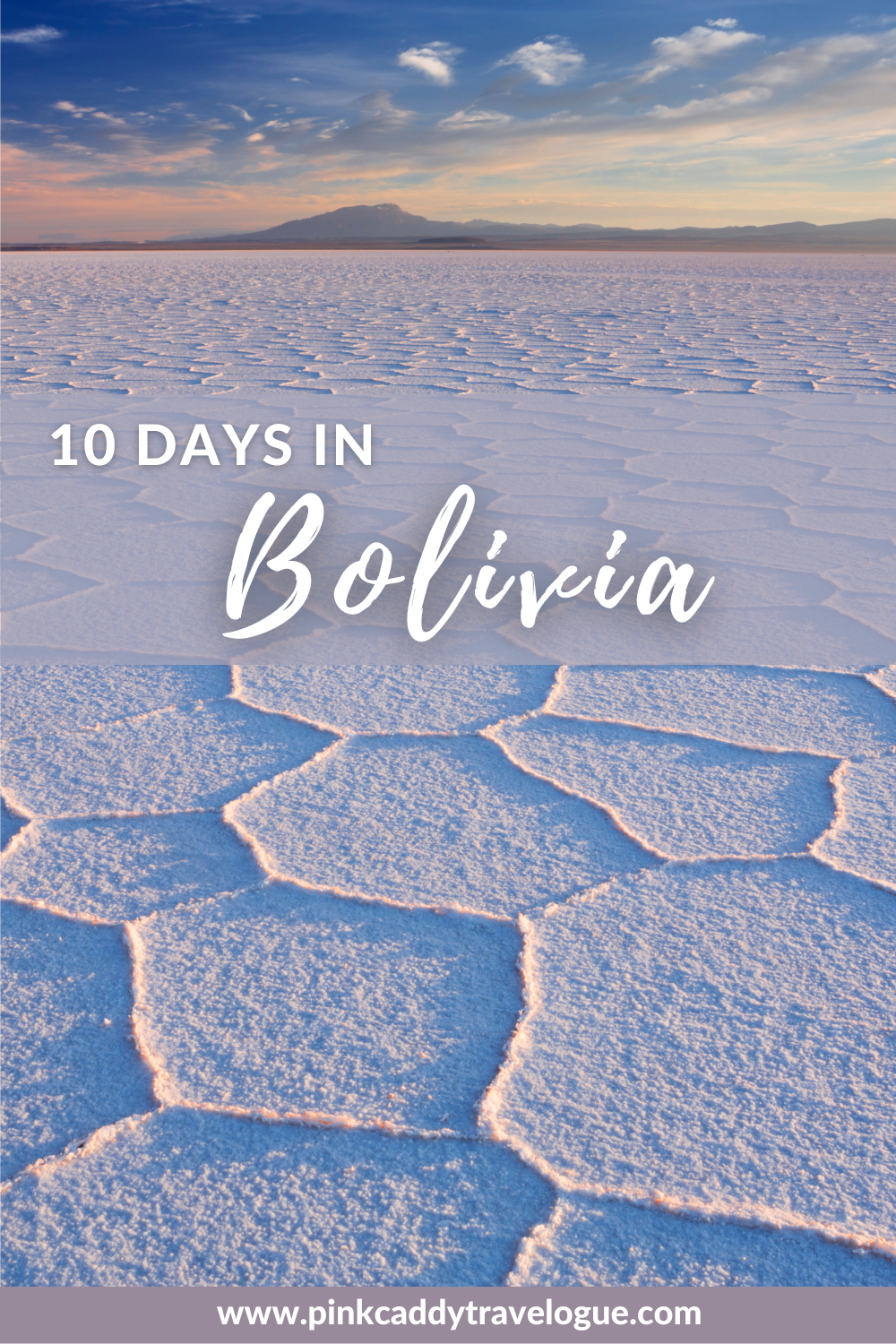
If you’ve never heard of Bolivia’s salt flats, I won’t judge you for thinking “salt flats? What’s so exciting about a bunch of salt?” But what if I told you that these salt flats cover the same amount of land as the entire state of Maryland and can be seen from space? And that the layer of salt left behind by a prehistoric lake is 33 feet thick? In fact, the area is so flat and so large that NASA uses it to calibrate satellite sensors. And during the rainy season, it’s known as the world’s largest mirror as the thin layer of water that collects on the surface perfectly reflects the sky.
Bolivia’s salt flats are unlike anything else on earth and are well worth the effort it takes to get here.
Most people choose between two options to explore the salt flats. One option is a 3-day tour that involves camping out under the stars in one of the least light-polluted places on the planet. You can also visit the lagoons that are home to flamingos that you don’t have time to get to on shorter tours.
However, 3 days is a long time commitment if you only have 10 days to explore all of Bolivia. So I recommend the other option, a 1 day tour of the salt flats. One day allows to learn all about how the area was formed and how people today mine the salt and make a living off of it. You’ll see the train cemetery and visit the salt mining town of Colchani. You’ll also spend plenty of hours driving on the salt flats and taking cool pictures. If you visit during the dry season, you’ll get to visit spectacular Incahuasi, the cactus island (note that you can’t get here during the rainy season).

The view from Incahuasi
Book your 1-day Uyuni tour here!
Afterwards, instead of spending another night in Uyuni, take a night bus back to La Paz. The trip is roughly 10 hours, so better to do it at night than waste a day. Because night buses are a frequent mode of travel in Bolivia, they are actually quite comfortable, far more so than an airplane!. The seats are plush, they recline, and they even provide blankets. Just be sure to keep your belongings secure as buses are popular spots for theft.
Alternatively, you can spend one more night in Uyuni and then fly from the Uyuni airport to La Paz the next morning.
Day 8-9: La Paz
Although you’ve been in La Paz several times now over the course of this Bolivia itinerary, it’s finally time to explore this wild city.
The city is large, chaotic, and intimidating to navigate, so I recommend starting with a tour of the city. This guided tour starts by riding the city’s unique cable car system for spectacular views of La Paz and the surrounding mountains. You’ll also visit the most historic neighbors, such as Plaza Murillo, and get to try traditional Bolivian street food. The tour ends by visiting the Witches’ Market and learning about that part of La Paz’s culture. The tour is extremely helpful in learning about La Paz, why it is the way it is, and how best to get around.

View of La Paz from the cable car
Candidly, if you’re like me and did not sleep well on that night bus journey, you might not feel like doing anything too crazy today. If that’s the case, save the walking tour for your second day in La Paz and instead spend the first day doing something more relaxing – like shopping for souvenirs (the streets around the Witches Market have some fantastic shops and everything is incredibly cheap!).
I also suggest getting lunch at one of La Paz’s best restaurants, the appropriately named Popular Cocina Boliviana. For the equivalent of $10 USD, you get a 3-course Michelin quality meal using ingredients native to Bolivia. They only serve lunch and don’t take reservations, so be sure to get your name on the list by 11:15 for the 12PM seating.

Incredibly aesthetic lunch at Popular Cocina
Other things to do in La Paz:
- Cholitas Wrestling Show – Some of La Paz’s indigenous women, the ones in the large skirts and bowler hats, practice wrestling as a form of female empowerment. Seeing one of their shows is one of the top things to do in La Paz. These tickets include the show and transfer from your hotel.
- Valle de las Animas – The “Valley of the Souls” is a valley of impressive rock pinnacles just 40 minutes from downtown La Paz.
- Moon Valley – Moon Valley is an area in La Paz where erosion has worn away the sides of the mountain, forming otherworldly spires of clay
- Tiwanaku Archaelogical Site – If you want to see more relics from ancient times, take a day trip to Tiwanaku, a city that pre-dates the Incas.
- Charquini Mountain Hike – La Paz is known as a base camp for those who want to explore the Andes Mountains. Even though one day isn’t long enough to tackle one of the 6000m peaks, it is enough to take a shorter hiking trip to an alpine lake. This day trip to Charquini Mountain includes a 3-hour hike to the beautiful Esmeralda Lagoon.
- Death Road – If you’re a thrill seeker (which I am not), you should not pass up the opportunity to bike down the “World’s Most Dangerous Road,” which just happens to be right outside of La Paz. The road, now closed to traffic, descends 3500m in just 40 miles (64km). I hear it’s an epic ride through one of the most beautiful places in the world! This tour has an extremely high safety rating with nothing but great reviews.
Day 10: Home
All good things must come to en end, including this Bolivia itinerary! So pack your bags, catch a flight home, and immediately start planning your next adventure.
Have any questions about planning a trip to Bolivia? Let me know in the comments or send me a message!
Like it? Pin it!


This 10 day itinerary, especially with few tourists, sounds ideal. The only thing I’d want to avoid is the 10 hour night bus journey. Are there any decent alternatives to this to get back to La Paz?
Yes, you could spend one more night in Uyuni and then fly back to La Paz in the morning from the Uyuni airport!
Loved learning about this area. I am like everyone else, always thought about Peru and not Bolivia, but the salt flats seems negative to see. I have always heard stories of the Coca leaves and wondered if they helped with elevation. I will try it when im in this area of the world someday
Hands down one of my top three travel experiences ever was Bolivia. Absolutely incredible beauty, culture and people. I am glad you had an amazing experience
I love you real travel tips – like for those of us who don’t sleep well on an overnight bus ride! Great post. Will be saving it for future.
We are headed back to South America and had considered adding Bolivia. After reading your post I know we are going to have to plan another visit and see some of these great spots in Bolivia. I paid attention to your tips for altitude sickness since we will have to deal with that next month!
Gosh! There are so many beautiful spots to explore in Bolivia! I would love to get the the salt pans and La Paz. Maybe someday.
Bolivia looks fantastic. The salt flats especially. What a great itinerary mixing both city and non-city activities. Great tips about the altitude. I know my friend went to La Paz and got really sick because of this so I’d definitely be following your advice to minimize chances of getting sick
Bolivia looks like such a raw and beautiful country compared to the more tourist-heavy spots. Those salt flat photos are absolutely mesmerizing. Thanks for putting together such a clear and helpful itinerary!